Data Science & Analytics Services in Dehradun | Grandeur Net
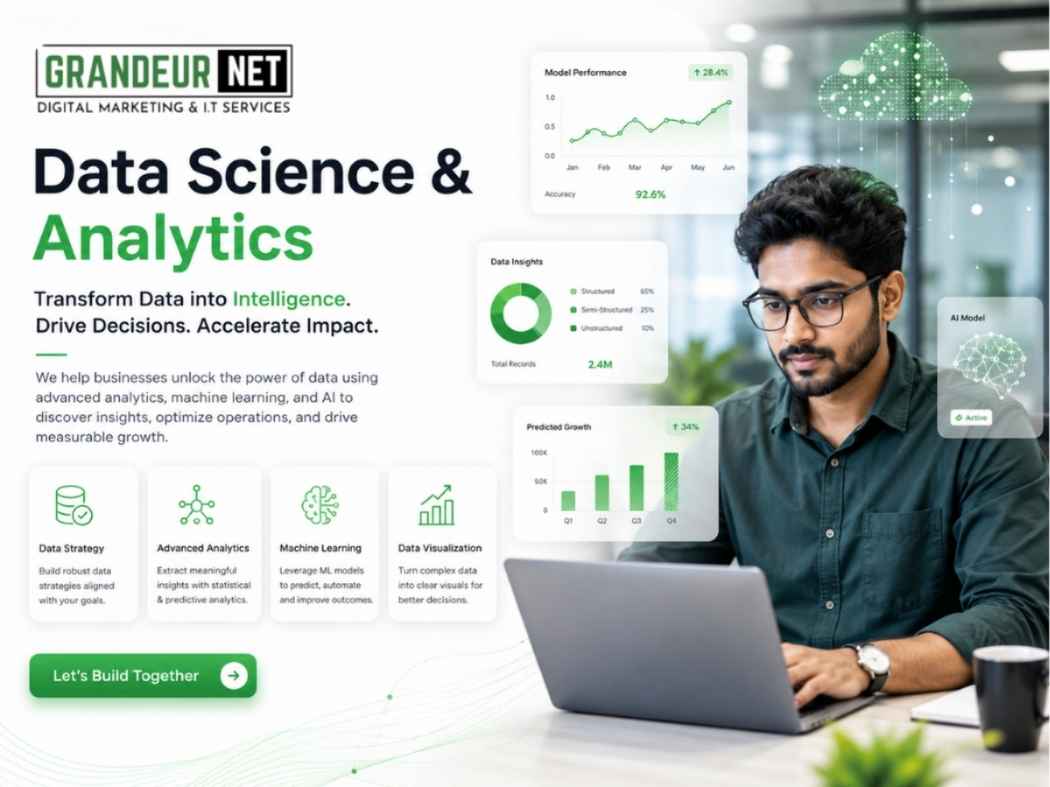
Data Science & Analytics Services in Dehradun: Turning Business Data Into Decisions That Actually Work
Most businesses aren't short on data. They're short on knowing what to do with it.
Sales numbers sit in one spreadsheet, customer behavior in another, marketing performance somewhere else entirely — and nobody has the time to connect the dots between them. Decisions end up getting made on instinct, or worse, on whoever argued their point most confidently in a meeting. Meanwhile, the actual answer was probably sitting in the data the whole time, just never looked at properly.
That's the gap data science and analytics is supposed to close — not by drowning you in dashboards nobody checks, but by turning scattered numbers into something you can actually act on.
At Grandeur Net, our data science and analytics services in Dehradun are built around one simple idea: analysis only matters if it changes a decision somewhere. We're not interested in producing reports that look impressive and get forgotten in a week.
Why "We Have a Lot of Data" Isn't the Same as "We Understand Our Business"
A business collecting data and a business using data are two very different things. Plenty of companies have years of customer records, transaction logs, and website analytics sitting untouched — technically valuable, practically ignored.
The problem usually isn't a lack of data. It's that nobody's translated it into something a decision-maker can actually use. A thousand-row spreadsheet doesn't tell you why customers are churning. A dashboard full of charts doesn't tell you which marketing channel is actually worth the budget. That translation step — from raw numbers to a clear "here's what this means and here's what to do about it" — is where most of the real value lives, and it's also the step most businesses skip.
The Three Levels of Analytics (and Why Most Businesses Only Use One)
| Type What It Answers Where Most Businesses Stop | ||
| Descriptive Analytics | "What happened?" | Most companies stop here — monthly reports, basic dashboards |
| Predictive Analytics | "What's likely to happen next?" | Fewer companies get here — forecasting demand, churn risk, sales trends |
| Prescriptive Analytics | "What should we actually do about it?" | Rarely reached — this is where recommendations turn into real action |
Most businesses live entirely in the first column — they can tell you what happened last month, but not what's coming or what to do differently. We build analytics work that pushes toward the second and third columns, because "what happened" without "what now" doesn't move a business forward on its own.
What Our Data Science Work Actually Involves
We don't treat this as one generic service. Depending on where a business actually needs help, our work covers a mix of the following:
- Data cleaning and structuring — before any analysis is useful, the underlying data usually needs to be organized, deduplicated, and made consistent
- Dashboards and reporting — clear, real-time views of the metrics that actually matter to your business, not a wall of numbers nobody reads
- Predictive modeling — using historical patterns to forecast things like demand, customer churn, or seasonal trends
- Customer and market analysis — understanding buying behavior, segments, and what's actually driving conversions or drop-offs
- Process and operations analytics — spotting inefficiencies in workflows that are quietly costing time or money
Where Analytics Tends to Make the Biggest Difference
Some parts of a business benefit from good analytics faster than others. A few areas we see this play out most often:
Marketing spend. Businesses often keep pouring budget into channels because "that's what we've always done," without a clear picture of which channel actually drives revenue versus which one just drives traffic.
Customer retention. Losing customers rarely happens randomly — there's usually a pattern in who leaves and when, and spotting it early is far cheaper than trying to win someone back after they've already left.
Inventory and demand planning. Overstocking ties up cash, understocking loses sales — and both usually trace back to forecasting that was never built on real historical patterns in the first place.
How We Approach a Data Science Project
Good analytics work follows a structure, not guesswork:
- Understanding the business question — before touching any data, we figure out what decision this analysis is actually meant to support
- Data audit — checking what data exists, how clean it is, and what gaps need filling before real analysis can start
- Model or analysis building — choosing the right approach, whether that's a straightforward dashboard or a more advanced predictive model
- Validation — testing findings against real outcomes before anyone acts on them, because a model that looks good on paper isn't automatically trustworthy
- Delivery and handover — presenting findings in a way that's actually usable by the people making decisions, not just the technical team
Common Mistakes Businesses Make With Data
A handful of patterns show up again and again:
- Collecting data without a clear question — gathering everything "just in case" tends to produce a mess with no clear purpose behind it.
- Trusting a model blindly — even a well-built model can be wrong, and results need to be checked against real-world outcomes before big decisions are based on them.
- Building dashboards nobody uses — a dashboard that isn't tied to an actual decision usually gets ignored within a few weeks of launch.
- Treating analytics as a one-time project — markets shift, and a model or report built a year ago on old patterns can quietly become misleading if it's never revisited.
Why Businesses Work With Grandeur Net for Data Science & Analytics
We combine technical data work with an understanding of how businesses actually operate — because a brilliant model means very little if nobody can connect it back to a real decision. Every engagement starts with a conversation about what you're actually trying to figure out, not a generic package pitched before we understand your business.
You keep full ownership of your data, models, and any tools we build for you — nothing is held back to create dependency. And we stay involved past the initial delivery, because analytics tends to get more valuable the longer it's maintained and revisited.
If your business is sitting on data that's never quite been put to use, we'd be glad to have that conversation.
Start working with Grandeur Net's data team today: grandeurnet.com/contact
Frequently Asked Questions
Recent Insights

Video Marketing: Untapped Opportunity for Dehradun Businesses
Aug 4, 2026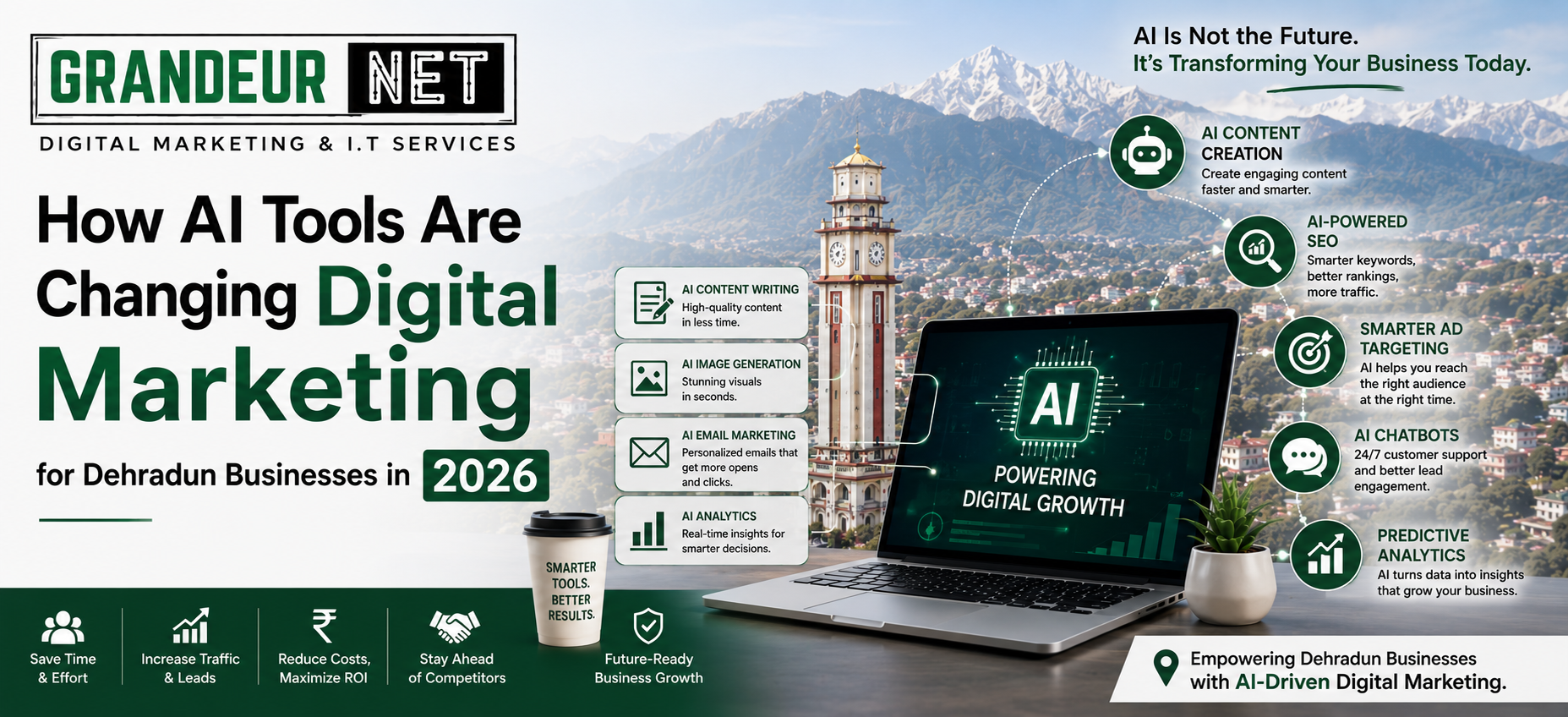
How AI Tools Are Changing Digital Marketing in Dehradun
Aug 4, 2026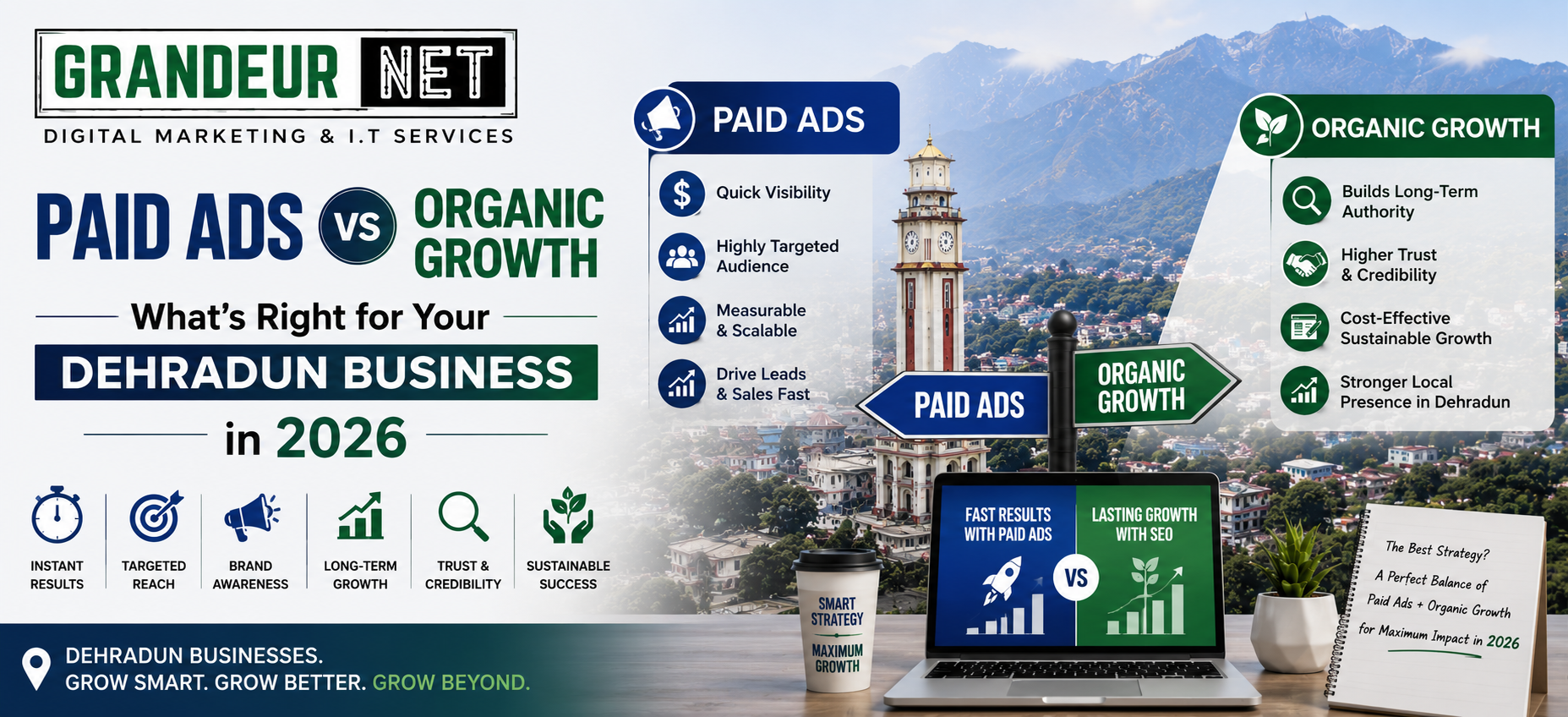
Online Reputation Management for Dehradun Businesses 2026
Aug 4, 2026
Paid Ads vs Organic Growth: What's Right for Your Dehradun Business in 2026
Aug 4, 2026